
How to Plan a Wedding Weekend in Scotland With Real Examples From Louize
Based on published venue information and Louize’s real-wedding accounts, checked on 5 October 2026. The sample schedule is an original planning example. It is not a reconstruction of a client’s full itinerary or budget.
A wedding weekend in Scotland gives you more than one occasion to spend time with the people who have travelled to celebrate with you. It also needs a plan for the hours around the ceremony: arrivals, meals, rehearsals, supplier access, overnight stays and departures.
The best starting point is deciding which parts of the weekend you want to host. You can then choose a castle or estate that suits the group and request prices for the actual events, rather than assuming an overnight booking includes everything.
This guide uses examples from Louize’s published work at Errol Park, Carlowrie Castle and Loch na Bo. It explains the planning decisions those examples raise and gives you a practical way to build your own schedule. To budget for the weekend as a whole, see our guide to wedding costs in Scotland.
Plan the time around the wedding as carefully as the wedding day itself.
What a wedding weekend should include
There is no requirement to fill every available hour. Start with the wedding day and add gatherings that you genuinely want to host.
You might choose a welcome meal the evening before, a short ceremony rehearsal and breakfast with family the following morning. Another couple might prefer an activity before the wedding and leave the final day free for travel.
Write down who is invited to each part. The wedding party, overnight residents and full guest list may be different groups. Clear invitations prevent guests from having to guess which arrangements include them.
Also decide who pays. If a gathering is optional and guests will pay individually, explain that before asking for attendance. If you are hosting, include the space, food, drinks and any transport in your own budget.
A real two-day celebration at Errol Park
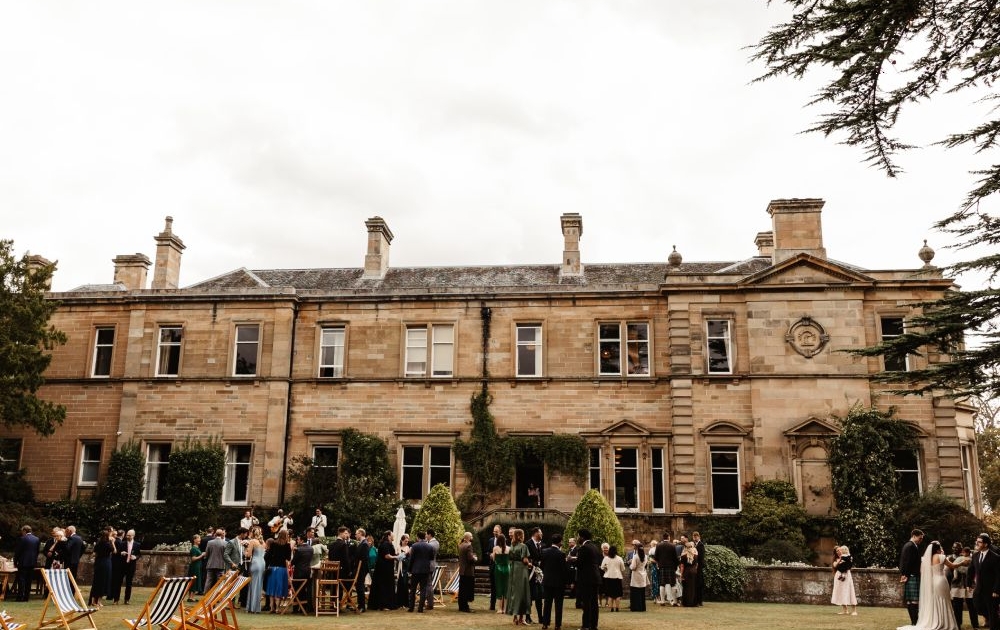
Teresa and Callum planned from London, with eight months of support from Louize. Their published Errol Park real wedding story describes a Friday rehearsal, Highland Games, a barbecue and a quiz before the wedding day. The following celebration included garden drinks, dinner in the Stables, a ceilidh, a DJ and guest buses.
That account shows how several different parts can form one celebration. It does not publish a client budget or establish the inclusions of another couple’s booking.
If you like the idea, begin with the Errol Park Estate venue feature, then discuss which spaces and events would work for your numbers. Errol Park’s own wedding information identifies it as an exclusive-use venue and lists the Stables for up to 200 guests.
The practical lesson is to ask for an event-by-event proposal. A rehearsal, an activity and an evening meal each need a location, a time and a person responsible.
A castle example with preparation the evening before
Our Carlowrie Castle wedding page includes Natalie and Craig’s celebration. The account describes a rehearsal the evening before, a large supplier team and a wedding day moving from an outdoor ceremony to a marquee reception.
It is a useful example of the preparation around a castle wedding, although it is not evidence of a standard weekend package or published client spend.
When considering a Scottish castle wedding weekend, ask which preparatory activities need venue access before the wedding day. A rehearsal may involve a small group for a short time, while furniture installation or a hosted dinner has different requirements.
Share those plans early so the venue and suppliers can confirm what is possible. Do not ask them to fit a complete additional event into a booking designed around one day.
Choose the venue around your group
Look beyond maximum reception capacity. Ask where guests can gather informally, where meals would happen and which rooms or buildings your booking includes.
For Errol Park, the venue’s accommodation page lists space for 20 guests in the main house and a further 20 elsewhere on the estate. It also identifies different room configurations within the house.
Those published figures help you begin a conversation, but they do not tell you which rooms are available or included for your dates. Request the actual allocation and prices.
For a smaller gathering, our Loch na Bo Estate feature describes six bedrooms accommodating up to 12 guests and a dining room seating up to 14. Larger celebrations require different arrangements.
The useful comparison is the fit between your resident group, dining plans and event guest list. Avoid choosing a property based on a single capacity number.
| Venue question | Why it matters to the weekend |
|---|---|
| How many guests can stay in the booked accommodation? | Establishes the need for other hotels or properties |
| Where can each group eat? | Separates a family breakfast from a larger hosted meal |
| Which spaces are included on each date? | Shows whether extra gatherings require additional hire |
| What are the arrival and departure times? | Sets the boundaries for activities and supplier work |
| What indoor alternatives are available? | Allows you to prepare a workable weather plan |
| Who is present to support the events? | Clarifies the venue and planning responsibilities |
Build a schedule with room to arrive
Start with the arrival information you know. Guests travelling from overseas may reach Scotland on different days and use different airports or onward connections.
Do not make every gathering depend on everyone arriving at one exact time. Decide which events are essential, which are optional and how late arrivals can join without disrupting the plan.
Give guests the property address, check-in instructions and any booked transfer details. Tell them whom to contact if their journey changes. Share this information in one place rather than across several informal messages.
For guests staying off site, explain the distance and transport arrangements in practical terms. They need to know the pickup point and departure time, not just the name of a nearby town.
Keep the first gathering straightforward
Choose a format that suits the people arriving and the venue’s access arrangements. A seated dinner needs a more fixed start and confirmed numbers than an informal gathering with a defined arrival window.
Ask the caterer what each option requires. Confirm the room, staffing, drinks service and finish time. If some guests will arrive after food service ends, decide what information or arrangements they need.
Leave space for people to settle into their accommodation before asking them to join an activity or formal event.
A sample wedding weekend schedule
The schedule below is an illustrative structure to adapt with your venue and suppliers. It is not the timetable of Teresa and Callum, Natalie and Craig, or any other client.
| Stage | Possible arrangement | Decision to confirm |
|---|---|---|
| Day before, afternoon | Resident arrivals and a short rehearsal | Check-in, rehearsal participants and supplier access |
| Day before, evening | Welcome meal or informal gathering | Guest list, catering, transport and finish time |
| Wedding morning | Preparation, breakfast and supplier setup | Rooms, food, deliveries and contact person |
| Ceremony and reception | Ceremony, drinks, meal and evening celebration | Final running order and room transitions |
| Morning after | Optional breakfast and farewells | Catering, checkout, collections and onward travel |
Use the structure to identify dependencies. A rehearsal cannot occupy a space while a supplier needs to install furniture there unless everyone has agreed how the work will happen.
Similarly, the morning after is not automatically free time. Accommodation checkout, equipment collection and personal belongings may all need attention before you leave.
Add names beside the tasks so responsibility does not fall to whichever family member happens to be nearby.
Plan each meal as a separate service
List the number of people expected for every meal. Wedding attendance, overnight residents and welcome-event guests should not be treated as one identical figure.
Ask for menus and service arrangements that suit the time available. If you want breakfast while hair and makeup are underway, establish where it will be served and how people can eat without leaving a scheduled appointment.
For the evening before, confirm the finish time with the venue and caterer. Decide whether you want speeches, a quiz or another organised element, and allow space for it in the schedule.
Ask how dietary requirements and final numbers are collected. Use one agreed version of that information for the relevant suppliers so later changes are not missed.
Include drinks explicitly. A meal quote may use a particular allowance or bar arrangement, and the agreement should explain what happens beyond it.
Give activities a clear place in the plan
An activity should fit the people attending, the venue and the time available. Ask about participation, accessibility, clothing, weather arrangements and supervision before adding it to the guest itinerary.
If you like the Highland Games in the Errol Park real wedding story, discuss a suitable version with the venue and activity provider. The published supplier list names BlueSky Experiences for that element.
Do not assume a lawn or courtyard can be used for any activity without permission. Confirm the location, setup requirements and what happens if conditions change.
Also provide an option for people who would rather watch or rest. A wedding weekend can offer shared time without requiring every guest to join every activity.
If music or a ceilidh appeals to you, explore our Scottish wedding traditions guide and discuss the practical requirements with the performers and venue.
Prepare indoor and outdoor plans together
A venue shortlist should include the indoor version of the celebration, even when the grounds are the main attraction. Ask to see the spaces at the guest numbers you are considering.
Meghan and Brian’s Loch na Bo real wedding story records indoor and outdoor ceremony options and a final decision on the day.
For your own arrangements, agree who decides, when the decision must be made and how suppliers will be told. Check whether furniture, flowers and sound equipment can be moved within the time available.
Think about the events around the wedding as well. A welcome activity or outdoor meal needs its own alternative, not only the ceremony.
Put the agreed alternatives into the supplier schedule and guest communication where appropriate. Clear instructions are more useful than expecting everyone to improvise from the same weather forecast.
Coordinate the spaces between events
Walk through the weekend as a guest and as a supplier. The two journeys reveal different questions.
Guests need directions, accessible routes, places to sit and an understanding of what happens next. Suppliers need access, working time, contact details and permission to use particular areas.
If a room changes from ceremony to dining, ask where guests will be during the turnaround and who carries out the work. If entertainment arrives while dinner is underway, agree an access route and setup plan that suits both teams.
For a marquee celebration, request one coordinated explanation of the infrastructure and service arrangements. Establish which supplier is responsible for each element rather than relying on overlapping assumptions.
The aim is a sequence that people can carry out comfortably. A schedule with no room for movement, preparation or a delayed delivery needs revisiting before the wedding.
Keep accommodation and transport connected
Allocate rooms provisionally before promising that everyone can stay together. Ask for the actual bed configurations and discuss any mobility or family requirements directly with the venue.
For guests off site, decide which journeys you are organising. Include the welcome evening and morning-after gathering where those guests are invited, rather than arranging transport only for the wedding reception.
Record passenger numbers separately for each departure. Some guests may attend the wedding but leave before the final event, while others may stay longer independently.
Confirm luggage capacity and collection arrangements when a transfer forms part of an airport journey. Ask the provider to quote the actual route and timing, including any waiting you require.
Give guests a clear deadline for confirming their plans. Tell them what changes you need to know about and who is managing the final transport list.
Budget for the whole weekend
Build the budget by event, then check for items shared across more than one day. This helps avoid both omissions and duplicate allowances.
| Budget section | Items to establish |
|---|---|
| Venue and accommodation | Hire dates, spaces, rooms, nights and required commitments |
| Food and drink | Separate guest counts and service for each gathering |
| Activities and entertainment | Providers, duration, equipment and alternatives |
| Styling and equipment | Installation, hire period, changes between events and collection |
| Transport | Each route, departure and passenger group you are funding |
| Planning and staffing | Preparation, attendance on each day and responsibilities |
Request the price for extra event access rather than assuming it comes with bedroom bookings. Ask suppliers whether extending hire or attendance changes their proposal.
None of the real weddings discussed here provides a public client budget. Use the examples to identify decisions and questions, then obtain your own quotes.
If the total exceeds your limit, consider whether every additional gathering is necessary. One well-planned welcome event may suit your priorities better than a full programme of hosted activities.
Decide who manages each day
Before the wedding, agree who holds the final schedule and who communicates changes. Include the venue, caterer, transport provider and other relevant suppliers in the handover.
Ask how planning attendance covers the day before, the wedding and any following event. A proposal for wedding day coordination should not be assumed to include a separate welcome evening.
Louize offers tailored planning proposals following consultation. Describe the whole celebration so the discussion reflects the events you actually want support with.
Keep guest questions and supplier questions directed to the appropriate contacts. That helps the couple and wedding party understand where they need to be without becoming the information desk for every delivery or transfer.
Frequently asked questions
Do we need exclusive use for a wedding weekend?
Ask what privacy, spaces and access your plans require. Some formats may need a private property booking, while others may work through separate event rooms and accommodation. The agreement should specify the areas and dates included.
Should every guest be invited to the welcome event?
Decide the guest list deliberately and communicate it clearly. You may host everyone or a smaller group, depending on the format and budget. Make sure the catering and transport arrangements use the same confirmed list.
Can the whole wedding party stay at the venue?
Check the actual rooms and bed configurations for your dates. Reception capacity and overnight capacity can differ. Establish suitable alternatives and transport for anyone staying elsewhere.
Does a weekend booking include catering for all three days?
Only if the proposal specifies it. Ask for each meal and drinks service to be itemised, together with guest numbers and staffing. Accommodation alone should not be read as permission or catering for another event.
Can we plan a Scottish wedding weekend from abroad?
Start with a clear brief covering dates, guests, events and accommodation. Agree how decisions and supplier information will be managed remotely, and what needs to happen during any visit to Scotland.
Are the real weddings examples of a fixed wedding budget?
No. They document real planning arrangements, but their client budgets are not published. The sample schedule in this guide is also illustrative and needs adapting to your booking.
Begin with your guests and the time you want together
Explore our featured Scottish wedding venues and read the linked real weddings to identify what appeals to you. Then describe the celebration in practical terms: who is coming, how long they will stay and which gatherings you want to host.
Before enquiring, note:
- Your approximate ceremony and reception numbers.
- How many people you hope to accommodate on site.
- The additional gatherings you want to host.
- Your preferred dates and total spending limit.
Talk to Louize about your Scottish wedding weekend. Share your preferred dates, approximate budget, guest count and any castle or estate already on your shortlist.
Sources
Checked on 5 October 2026. Real-wedding facts are attributed below. The planning framework and sample schedule are original guidance, not claims about undocumented client arrangements or spending.
- Louize: Teresa and Callum. Errol Park events, planning origin and duration, and published activity supplier.
- Errol Park: Weddings. Exclusive use and Stables capacity.
- Louize: Carlowrie Castle Weddings. Natalie and Craig’s rehearsal and celebration format.
- Errol Park: Accommodation. Main-house and estate accommodation.
- Louize: Loch na Bo Estate. Published bedroom and dining information.
- Louize: Meghan and Brian. Indoor and outdoor ceremony planning.
- Louize: Wedding Planning. Tailored planning proposals.
- Louize: Errol Park Estate. Related venue feature.